Berwick-upon-Tweed
The Unlikely Pilgrimage of Harold FryBerwick-upon-Tweed is the northernmost town in England, and in Rachel Joyce's novel it becomes the fixed point toward which the entire narrative strains. It is the home of St Bernadine's Hospice, where Queenie Hennessy lies dying of cancer, and it is the destination Harold Fry promises to reach on foot. The town's name first appears on the pink envelope of Queenie's letter, and from that moment it carries the weight of Harold's past, his failures, and his desperate hope that he might still save a life. Berwick-upon-Tweed is not merely a place on a map; it is the horizon against which Harold measures every step of his journey, the imagined end that gives meaning to his walking.
The Letter and the Promise
The novel opens with the arrival of a pink envelope at Harold's home in Kingsbridge. His wife Maureen reads the postmark aloud: Berwick-upon-Tweed. Harold does not know anyone in Berwick, and he says so, but Maureen insists, 'I think not. They don't get something like a postmark wrong.' The letter is from Queenie Hennessy, a woman he worked with twenty years ago, and it tells him she is dying. Harold's response is to write a reply, but when he sets out to post it, he finds he cannot let the letter go. Standing in a phone box, he pictures Queenie dozing at one end of England and himself at the other, with roads, fields, rivers, woods, moors, peaks and valleys, and so many people in between. The decision comes in the same moment as the idea. He calls the hospice and says, 'Tell her Harold Fry is on his way. All she has to do is wait. Because I am going to save her, you see. I will keep walking and she must keep living.' He insists he is coming by foot, from South Devon all the way up to Berwick-upon-Tweed. The promise is made, and Berwick-upon-Tweed becomes the anchor of his existence.
The Geography of the Journey
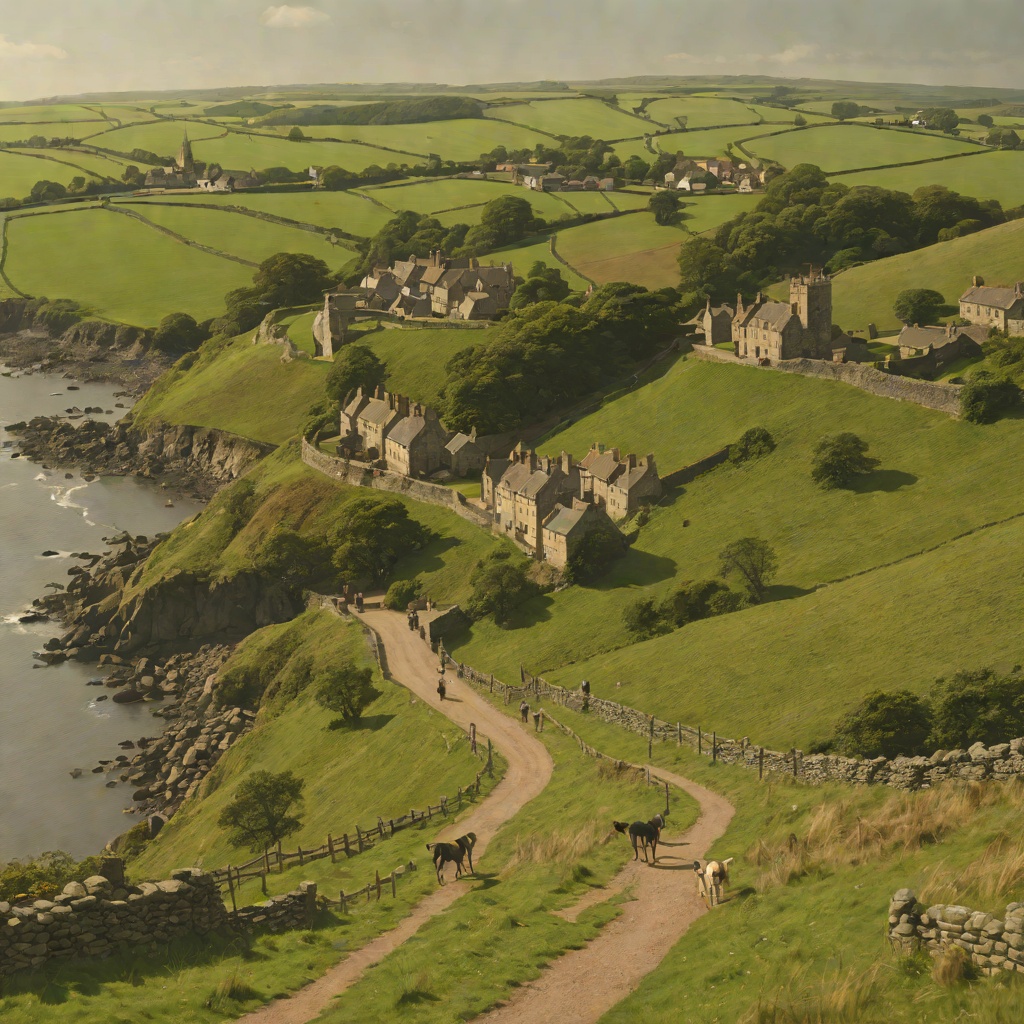
Berwick-upon-Tweed is the terminus of a journey that Harold maps out in his mind from the very first day. Standing on the road out of Kingsbridge, with the sea behind him, he sees before him rolling hills and the blue outline of Dartmoor, and beyond that the Blackdown Hills, the Mendips, the Malverns, the Pennines, the Yorkshire Dales, the Cheviots, and finally Berwick-upon-Tweed. The town is the last name in a litany of English geography, the point where the land ends and the sea begins. As Harold walks, he measures his progress not in miles but in the changing landscape: the pale Cotswold stone becomes the red brick of Warwickshire, and the land flattens into middle England. He follows the compass northwards, going by day or by night, mile after mile after mile. Berwick-upon-Tweed is always ahead of him, the fixed star of his pilgrimage. When he calls the hospice from Nailsworth, he estimates he will arrive in about three weeks, possibly more or indeed less, and he pictures the space between himself and Queenie: the hills, the roads, the people, the sky, and now he places the image of himself among them, a little broken, a little tired, his back to the world, but determined not to let her down.
The Arrival
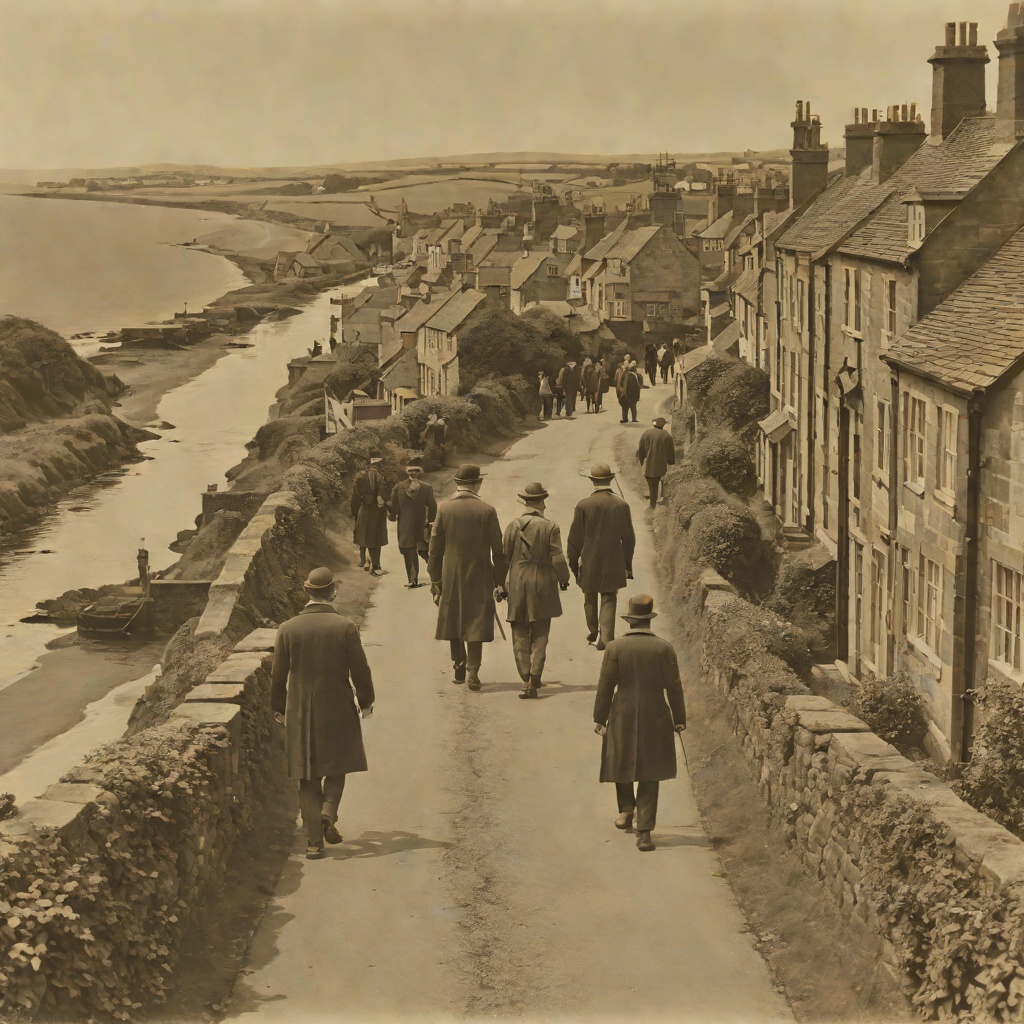
After eighty-seven days of walking, Harold Fry arrives at the gates of St Bernadine's Hospice in Berwick-upon-Tweed. His journey, including mistakes and diversions, has amounted to six hundred and twenty-seven miles. At three thirty on a Tuesday afternoon he smells salt in the wind, and an hour later he reaches the brow of a hill and sees a town lying before him, fringed by the endless gap that is the sea. He approaches the pinkish-grey town walls, but no one stops, or looks twice, or offers him food. The building before him is modern and unassuming, flanked by trembling trees, with an old-fashioned street lamp close to the main entrance and a sign pointing to a car park. Several bodies sit in deck chairs on the lawn, like clothes set out to dry, and a seagull wheels and barks overhead. Harold walks the soft curve of the tarmac drive and lifts his finger to the buzzer. He wishes the moment would hold itself, like an image cut out of time, his dark finger against the white button, the sun on his shoulders, the seagull laughing. His journey is over.
The Symbolic Significance
Berwick-upon-Tweed is more than a destination; it is the embodiment of everything Harold has been walking toward. It represents the possibility of atonement, the chance to undo the failures of a lifetime. The town is the place where Queenie waits, and her waiting is the condition of his walking. As long as he walks, she must live. Berwick-upon-Tweed is also the site of Harold's final reckoning with the past. After his breakdown in a Berwick café, he walks along the seafront with Maureen in the dark, and he knows that Queenie will remain with him, and David too, and Napier, and Joan, and his father with those aunts, but there will be no more fighting them, and no more anguish for the past. They are part of the air he walks through, just as all the travellers he has met are part of it. He does not know what will follow from Berwick-upon-Tweed, and he is ready for that. The town, which once seemed impossibly distant, becomes the place where Harold finally lets go of the past and accepts the uncertainty of the future. It is the end of his pilgrimage and the beginning of whatever comes next.